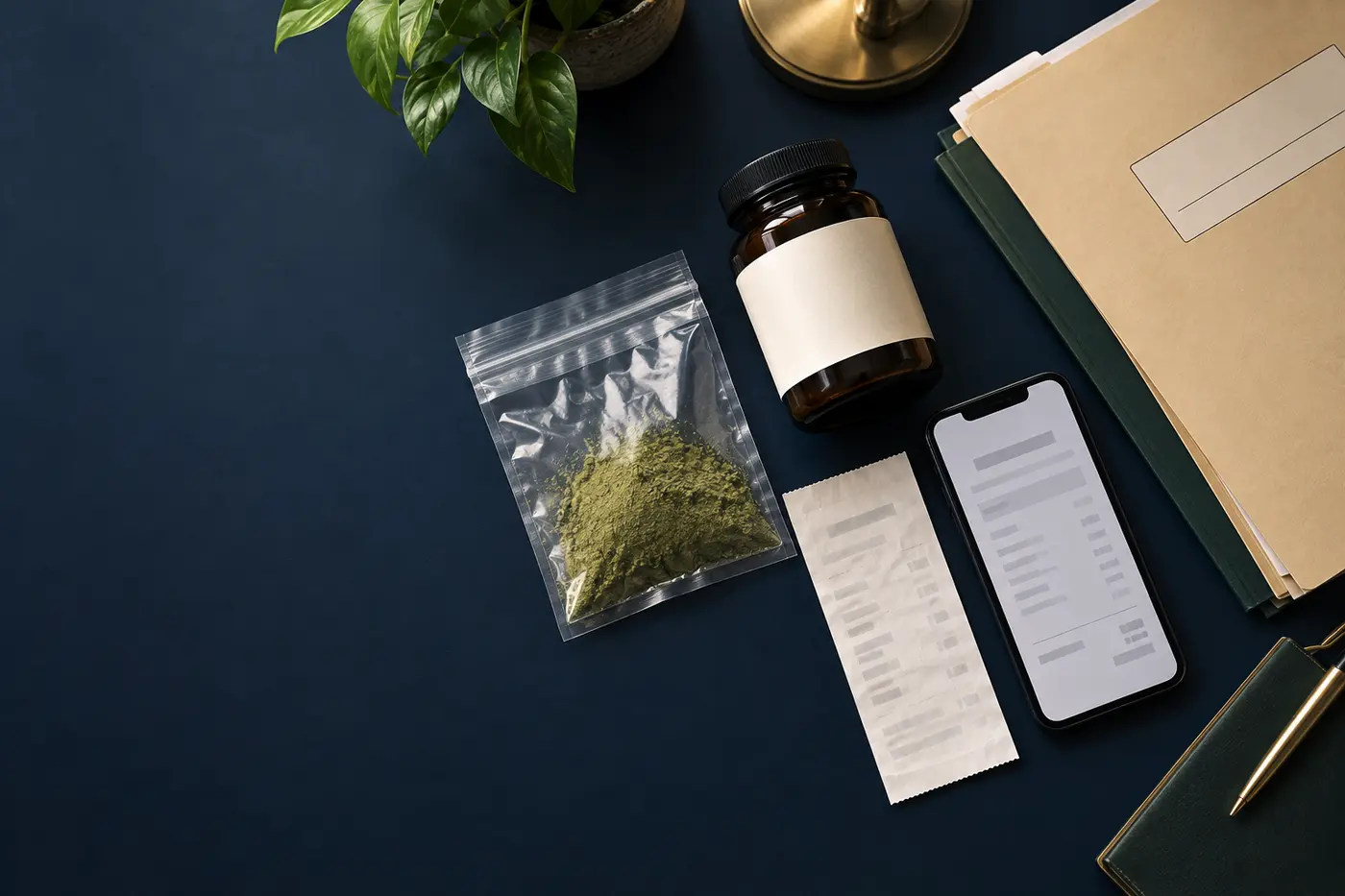
Keep the physical product
- Retain the container, cap, seal, outer packaging, inserts, and remaining product.
- Do not combine it with another container, alter it, consume more, or discard it.
- Store it safely away from children and pets, consistent with label instructions.
- Photograph every side, including brand, ingredients, amount, warnings, UPC, lot, and expiration information.
Save proof of purchase
Keep paper and digital receipts, card or bank statements, online order confirmations, shipping notices, retailer account history, subscription records, and the location of an in-person purchase. Save the original files when possible rather than relying only on screenshots.
Preserve advertising and labeling
Save product pages, advertisements, social posts, emails, and claims about safety, strength, ingredients, recommended serving, or intended effects. Note the date each item was captured and its web address.
Create a factual timeline
Record product use, approximate amount and frequency, symptoms, emergency calls, treatment dates, diagnoses, providers, missed work, and communications with sellers. Distinguish what you personally observed from what someone else reported.
Medical records and expenses
Keep discharge instructions, laboratory results available through patient portals, bills, prescription information, insurance explanations of benefits, and travel or other documented expenses. A lawyer can advise whether formal record requests are needed.
Evidence preservation is not medical care. Seek immediate treatment for serious symptoms and follow instructions from qualified healthcare professionals.
Avoid independent testing or public disposal
Testing can consume or alter a sample, and disposal can eliminate evidence. Obtain legal guidance before transferring the product or arranging laboratory work.
Attorney Advertising. This checklist is general information, not legal advice, and does not create an attorney-client relationship.